01How do three-level biosecurity hubs combine off-site truck washing with on-farm barn hygiene?
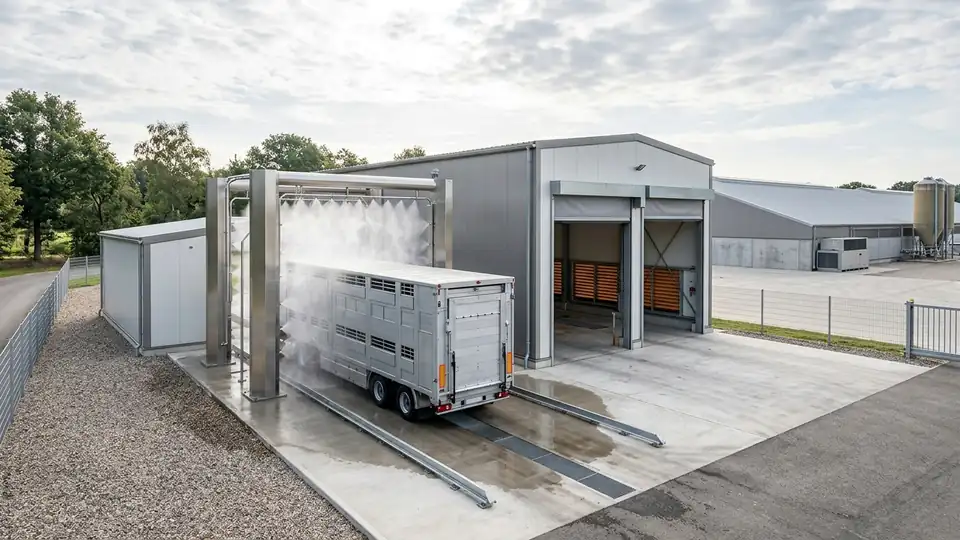
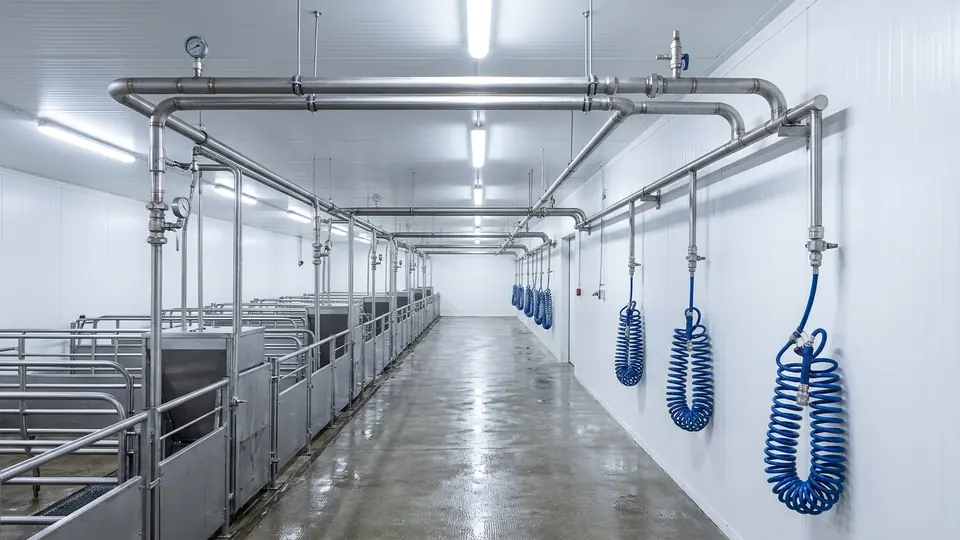
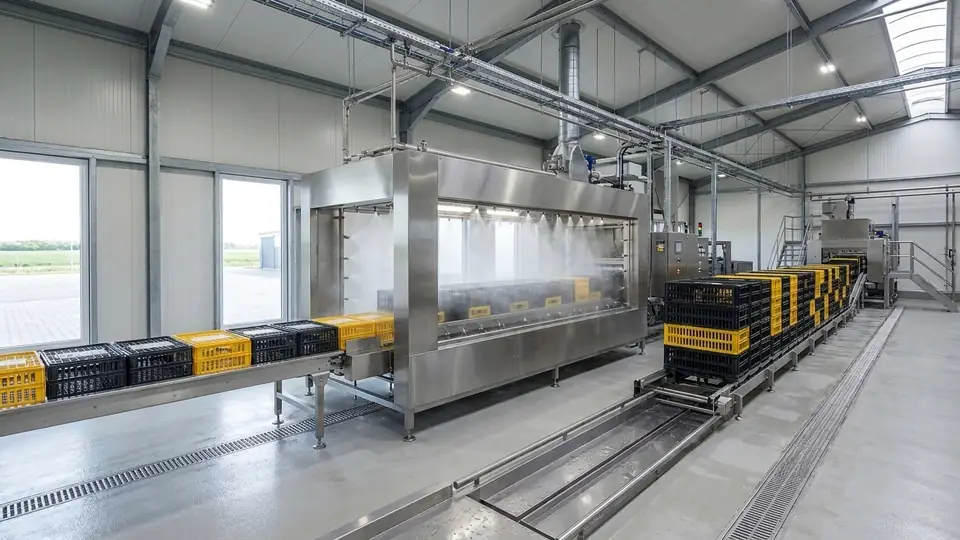
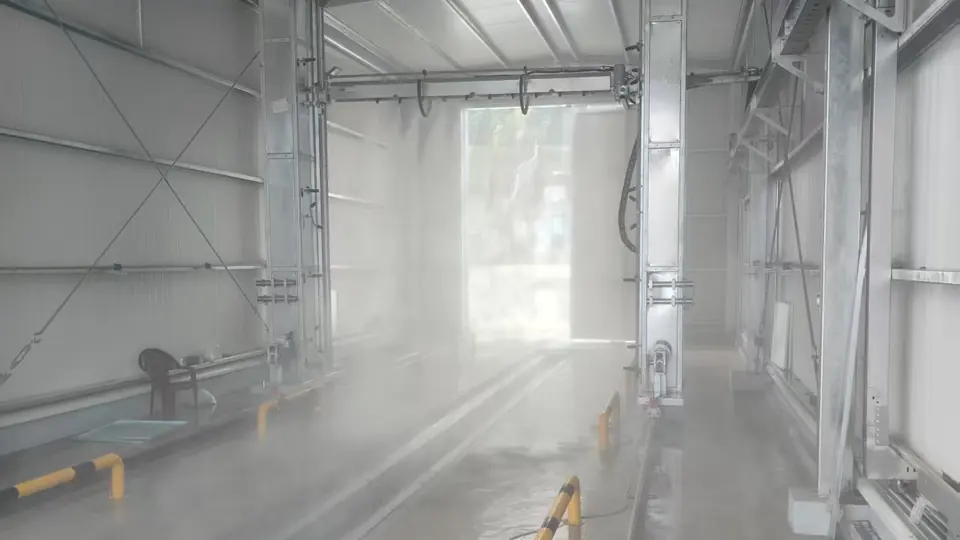
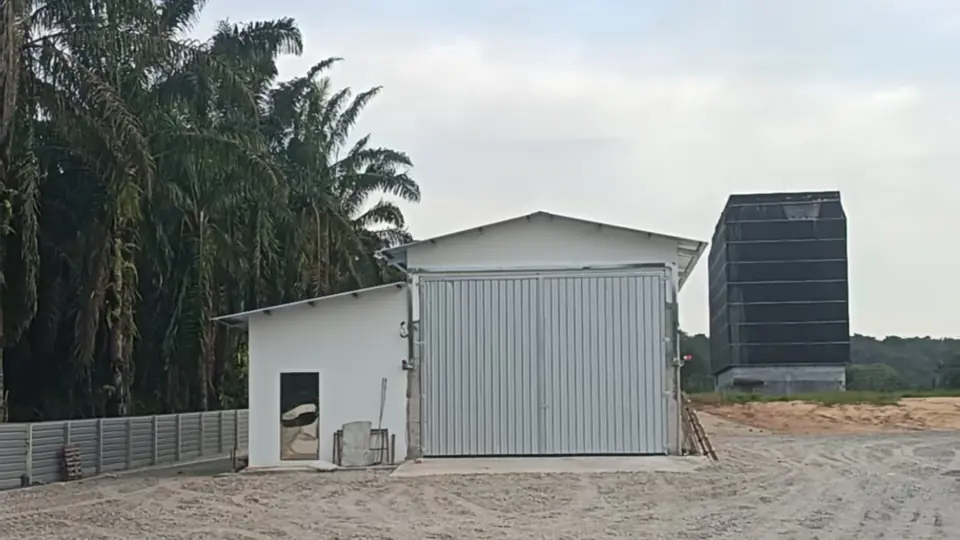
BioFortis Three-Level Architecture places 20 MPa vehicle washout and 700–800 kW thermal drying 3 km off site (Level 1), enforces gate fogging and heated hand hygiene at the farm fence (Level 2), and runs central stainless cleaning inside barns (Level 3) verified by gate PCR.
02What thermal drying temperature and hold time are required after trailer washout in humid climates?
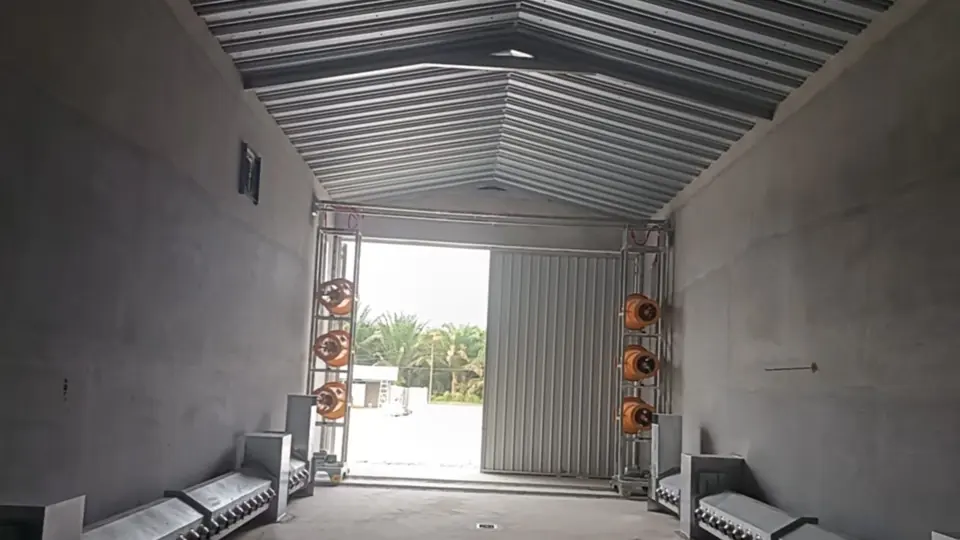
Commercial biosecurity protocols target 70°C+ at the coldest trailer surface point held for at least 30 minutes after all visible water evaporates. BioFortis 700–800 kW drying chambers use high-velocity circulation and exhaust dampers to complete cycles reliably in 30–45 minutes at 85–95% RH.
03How do poultry farms automate multi-tier cage washing and perimeter disinfection?
BioFortis pairs the cordless 48V 45AH automated poultry cage washing machine (P27) with full-house low-pressure misting disinfection (P08), 30–80 m perimeter fog cannons (P26), and heated automatic two-hand entry stations (P23) to sanitize multi-tier layer and broiler houses cleanly between flocks.
04Can biosecurity hubs phase implementation from vehicle wash bays to on-farm PCR screening?
Yes. Commercial swine integrators commonly deploy Phase 1 off-site automated truck washout and thermal drying bays first to stop external transport vectors immediately, then expand into Phase 2 centralized barn piping, precision medicators, and gate PCR testing without discarding existing hardware.
05How do slaughterhouses and bulk feed mills prevent unloading docks from contaminating supplier farms?
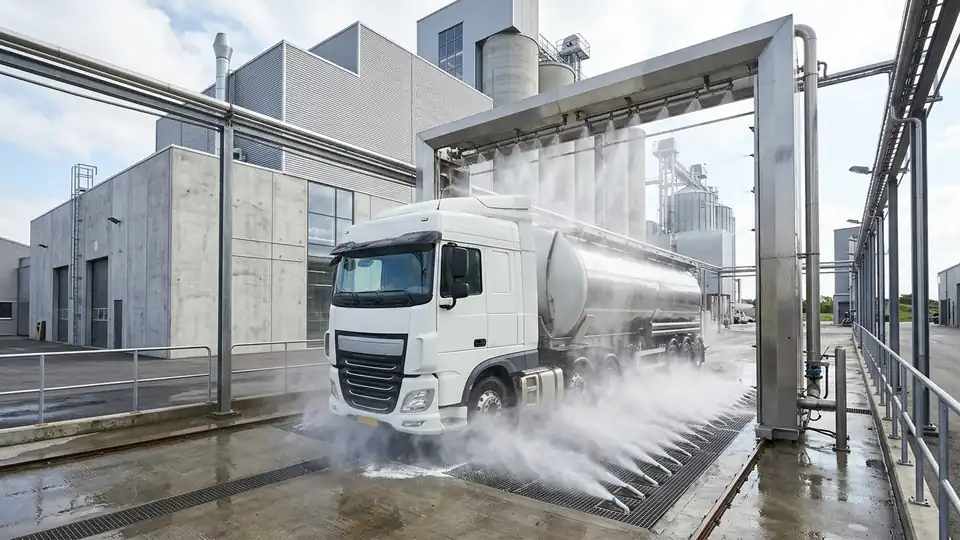
Slaughterhouses and feed mills install high-throughput touchless exterior gantries (P02), IP67 undercarriage chassis washers (P03), and 120 kW natural gas or diesel hot-water boilers (up to 100°C) paired with rapid 700–800 kW drying bays so every departing rig leaves sanitized and dry.
06How does BioFortis determine which solution fits a 1,200-sow farm versus a 50,000-sow integrator?
Sizing scales directly to daily external truck arrivals, barn room counts, and climate conditions. Smaller farms deploy single-lane wash bays or mobile P24 units plus UPN0102 screening, while 50,000-sow complexes deploy 3-lane rail telescopic arms, multiple drying chambers, and 32-sample UPN0104 systems.
07How fast can BioFortis deliver turnkey civil and utility CAD drawings for a new solution?
BioFortis issues complete civil apron, dirty/clean traffic routing, drainage trench, buffer water tank, and 380V/60Hz electrical CAD drawings within 5 business days of order confirmation so local contractors execute site concrete work accurately in parallel while factory equipment is built.
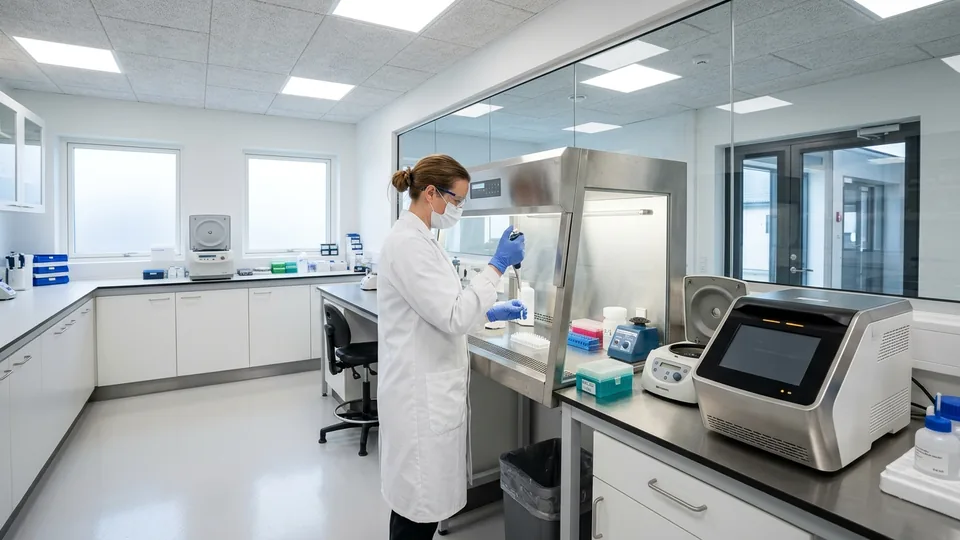
08Do on-farm ASFV PCR screening labs require costly negative-pressure HVAC construction?
No. Both UPN0102 and UPN0104 perform automated magnetic-bead nucleic acid extraction and real-time fluorescence PCR inside sealed pre-filled reagent cartridges, allowing safe benchtop installation inside a compact <15 m² clean reception room without complex multi-room airlocks while completely eliminating amplicon cross-contamination risks.
09How much water and labor does centralized in-farm cleaning save compared to portable washers?
Replacing portable cold-water washers with centralized 20 MPa hot-water stainless manifolds (P07) eliminates heavy machine hauling across barns, cuts washout labor turnaround by 35–50%, reduces total farm wash sewage discharge volume by up to 40%, and cuts lagoon waste handling loads substantially.
10Are all solutions supported with 60Hz power customization and 12-month export spare kits?
Yes. Every turnkey equipment package supports custom 60Hz electrical builds for Latin American and North American sites, ships in moisture-sealed export crates with consolidated 12-month P28 wear-part kits, and includes 24-hour remote engineering support for smooth, reliable field commissioning overseas.