Integrated Farm Biosecurity: Wash · Disinfect · Dry · Detect
Thermal Pathogen Inactivation (TADD)

Automated Livestock Vehicle Thermal Drying Rooms (700–800 kW)

Wet livestock trailers carry viable pathogens directly across clean farm perimeters. BioFortis Thermal Assisted Drying and Decontamination (TADD) chambers drive trailer surfaces to 70°C+ with differential zero-dead-zone airflow, inactivating ASFV, PRRSV, and PEDV in 30–45 minutes even under 85–95% tropical humidity.

700–800 kWFull-Bay Heating Output
40 kW MaxFan & PLC Electrical Load
<14 mLivestock & Feed Trucks
4 RepeatMalaysia Commercial Units
Vehicle Thermal Drying Rooms
System Overview

Why Is Thermal Assisted Drying (TADD) Essential After Livestock Truck Washing?

BioFortis 700–800 kW livestock trailer drying systems eliminate residual washout moisture and sustain 70°C+ surface holding temperatures for 30 minutes, thermally inactivating African Swine Fever Virus (ASFV), PRRSV, and PEDV inside inaccessible floor seams, wheel wells, and multi-deck slats.

Last reviewed: November 2026 · Engineering Specification Rev. 2.5
700–800 kWPeak Thermal Heating Power
70°C × 30mVerified Inactivation Hold
<14 mTarget Truck Length
85–95% RHTropical Climate Proven
Series Lineup (2 Models)

Which Thermal Drying Configuration Fits Your Biosecurity Facility?

Choose between full-scale 700–800 kW livestock truck drying chambers for external haulers or scalable 10 kW PTC electric modules for quarantine rooms and transfer vans.

P05 Fully Automatic Livestock Truck Thermal Drying Room (700–800 kW)

Fully Automatic Livestock Truck Thermal Drying Room (700–800 kW)

Industrial 700–800 kW thermal decontamination chamber for livestock trailers and feed trucks under 14 m. Engineered with differential temper...

Rated Voltage: AC 380V / 50Hz

View Specs
P06 PTC Modular Electric Hot Air Drying Unit (10 kW)

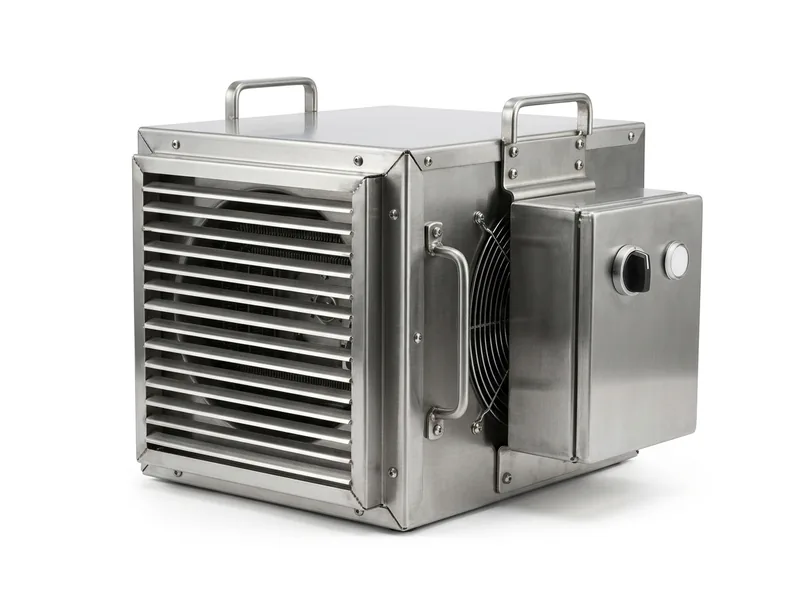
PTC Modular Electric Hot Air Drying Unit (10 kW)

10 kW modular PTC electric hot air blower delivering 1,500 m³/h airflow. Combine multiple units flexibly to heat compact disinfection rooms,...

Rated Voltage: AC 380V

View Specs
How It Works

How Does BioFortis Eliminate Cold Spots and Cut Fuel Waste in Truck Drying?

Differential Thermal Zoning Targets Wheel Wells and Chassis Cold Spots

Differential Thermal Zoning Targets Wheel Wells and Chassis Cold Spots

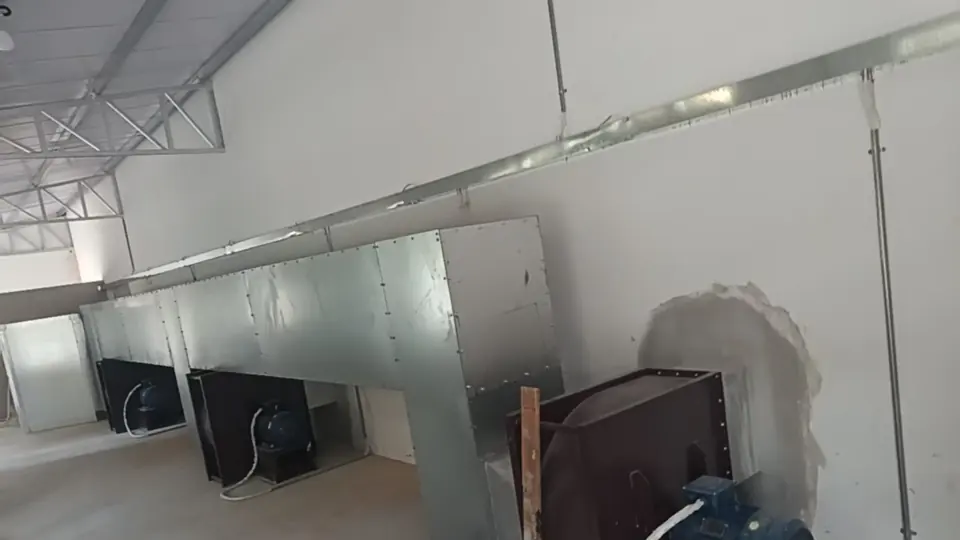
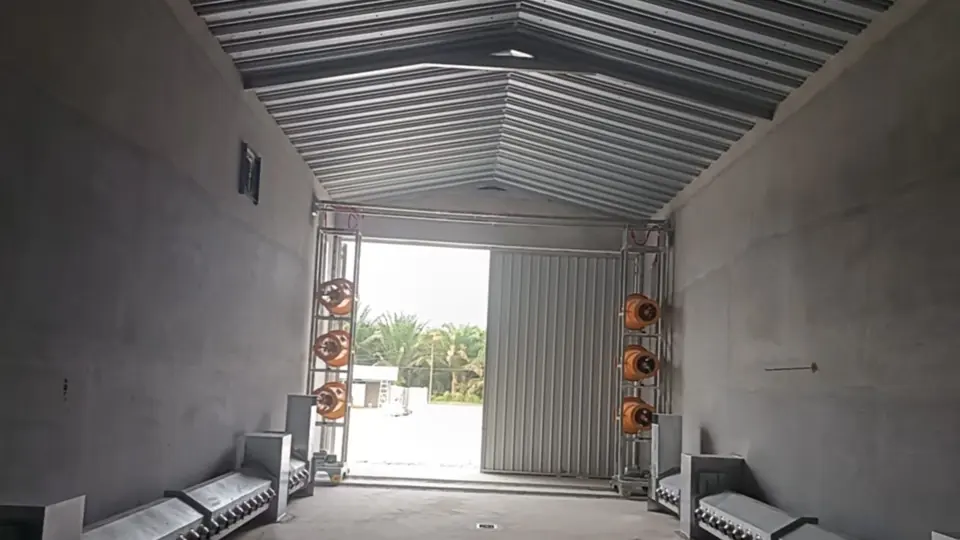
Conventional overhead heaters allow hot air to stratify near the ceiling while trailer axles, wheel wells, and lower deck corners stay cool and wet. BioFortis uses dual-side high-temperature circulation fan towers and floor-level differential ducts to direct concentrated heat straight into heavy steel undercarriages.

ZeroThermal Dead Zones
70°C+Coldest-Point Target
High-Volume Moisture Exhaust Engineered for 85–95% Tropical Humidity

High-Volume Moisture Exhaust Engineered for 85–95% Tropical Humidity

In humid Southeast Asian climates, washed hog trailers fail to air-dry overnight and recirculating humid air stalls evaporation. Our insulated thermal plenum pairs rapid heat exchange with automated vapor exhaust dampers, maintaining predictable 30–45 minute drying cycles without energy waste.

85–95% RHAmbient Humidity Rated
30–45 minTypical Full Cycle
One-Touch PLC Cycle Control & Audit Logging Prevents Early Cutoff

One-Touch PLC Cycle Control & Audit Logging Prevents Early Cutoff

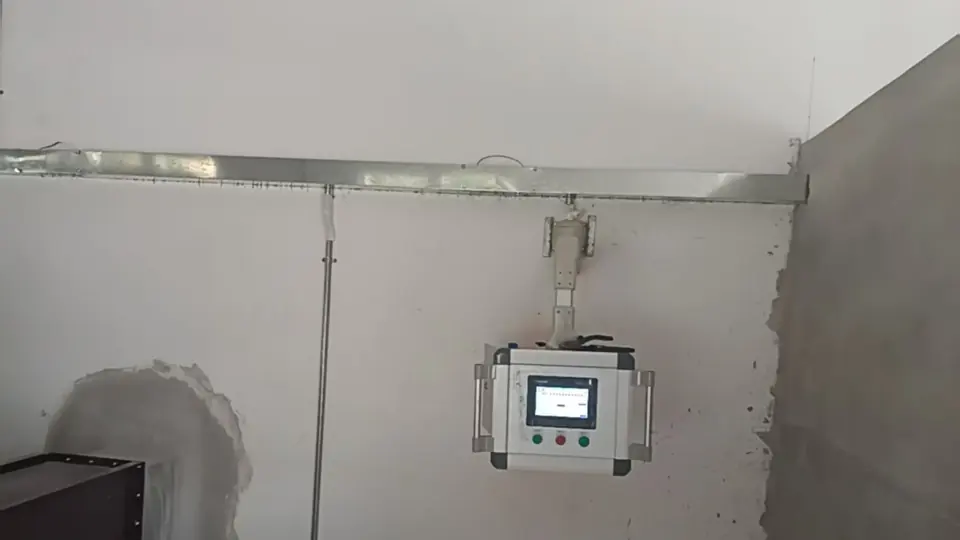
During peak live-haul dispatch, drivers often cut manual drying cycles short. BioFortis equips every drying chamber with a wall-mounted PLC touchscreen that automates pre-heat, 70°C+ holding timers, and cool-down while logging multi-point temperature curves for verifiable biosecurity audits.

One-TouchAutomated PLC Start
100%Auditable Temp Logs
System Layout

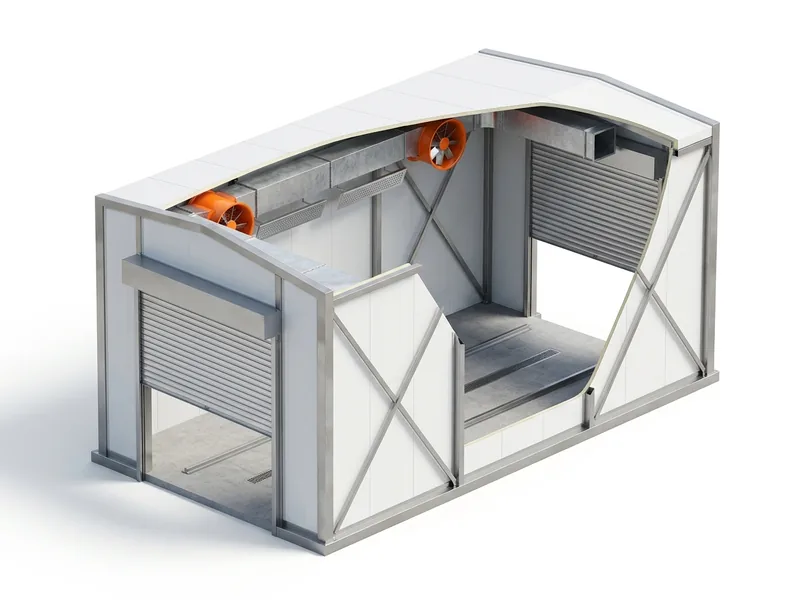
Inside a BioFortis Thermal Drying Chamber: Four Core Sub-Assemblies

700–800 kW Thermal Exchanger

High-output indirect thermal unit delivers rapid chamber ramp-up with clean, soot-free heated air circulation.

Dual-Side High-Temp Fan Towers

Continuous-duty high-velocity circulation fans sweep every deck level of multi-tier hog trailers without dead zones.

Vehicle Thermal Drying Rooms structural breakdown
Floor-Level Differential Ducts

Pressurized bottom manifolds direct focused thermal airflow into wet wheel arches, cab steps, and chassis rails.

PLC Touchscreen & Temp Logger

Enforces preset drying and 70°C+ holding timers automatically and records verifiable cycle completion data.

Planning a Drying Room for Tropical Humidity or Sub-Zero Winters? Send us your fleet size and ambient climate data for a climate-matched 700–800 kW chamber or 10 kW PTC array layout within 12 hours.
Technical Specifications

What Are the Exact Technical Specifications of BioFortis Drying Systems?

Factory engineering specifications comparing our full-size 700–800 kW truck drying chamber (P05) and modular 10 kW PTC hot air dryer (P06).

ParameterSpecificationNote
Max Heating Output700–800 kW (P05) | 10 kW/unit (P06)Full trailer bay vs scalable modular array
Electrical Supply & LoadAC 380V / 50Hz | Max 40 kW (P05)40 kW covers fans & PLC; P06 draws 10 kW per module
Target Vehicle / Room SizeLivestock & Feed Trucks <14 m (P05)P06 scales flexibly for supply rooms & van bays
Airflow ArchitectureDifferential Zoning, Zero Dead ZonesP06 delivers 1,500 m³/h per self-regulating PTC module
Cycle AutomationOne-Touch PLC & Multi-Point LoggingAutomated pre-heat, hold timer & cool-down
Climate Validation85–95% RH Tropical & Cold ClimatesProven across 4 consecutive units in Perak, Malaysia
Sizing & Site Prep

How Many Drying Rooms and kW Load Does Your Daily Fleet Require?

Interactive Engineering Tool

Truck Wash & Thermal Drying Hub Sizing Calculator

Estimate required wash lanes, 700–800 kW drying chambers, daily water demand, and 380V electrical load for your biosecurity center.

Recommended Wash Bays (20 MPa)--
Recommended Drying Rooms--
Estimated Wash Water Demand--
Estimated Connected Load--
“A washed trailer that leaves the bay still wet is an unverified biosecurity barrier. Only differential 70°C+ thermal drying eliminates hidden viral reservoirs before trucks approach your sow units.”
BioFortis Thermal Biosecurity Engineering · Validated Across 4 Repeat Overseas Units
Common Field Problems

What Drying Room Failure Modes Does BioFortis Prevent?

Field Problem

Overnight Air-Drying Failure in 85–95% RH

How BioFortis Solves It

High-velocity circulation paired with active moisture exhaust drives complete evaporation in 30–45 minutes even during tropical monsoons.

Field Problem

Fatal Cold Spots in Wheel Wells & Lower Decks

How BioFortis Solves It

Floor-level differential manifolds force heated air across heavy undercarriage steel rather than letting heat pool at the roof.

Field Problem

Drivers Cutting Drying Cycles Short

How BioFortis Solves It

One-touch PLC automation locks in target holding temperature and duration with verifiable logs before gate release.

Field Problem

Excessive Fuel Cost from Poor Insulation & Recirculation

How BioFortis Solves It

Insulated plenum architecture and controlled exhaust staging minimize thermal waste per trailer cycle.

Delivery Process

How Does BioFortis Engineer and Commission an Overseas Drying Room?

01

Climate & Fleet Sizing

Analyze daily truck count, ambient humidity/temperature, and trailer dimensions under 14 m.

Day 1–2
02

Chamber & Ducting CAD

Deliver insulated panel dimensions, foundation drawings, fan tower layout, and 40 kW wiring specs.

Day 3–7
03

Thermal & PLC Factory FAT

Run full electrical, fan balance, and PLC temperature-control verification prior to shipment.

Week 3–5
04

Modular Container Packing

Ship pre-fabricated fan towers, heat exchanger, ducts, and PLC cabinet in export containers.

Week 5–6
05

Commissioning & Verification

Complete on-site or remote HMI commissioning and multi-point thermal mapping with farm staff.

On-Site
Field Proof: 4 Consecutive Repeat Drying Room Installations in Perak, Malaysia
Field Track Record

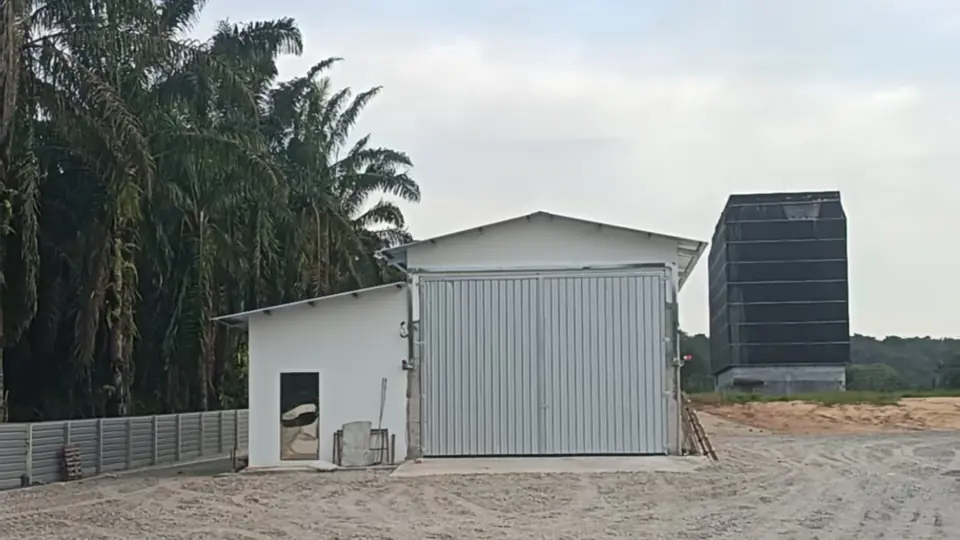
Field Proof: 4 Consecutive Repeat Drying Room Installations in Perak, Malaysia

In Malaysia's 85–95% ambient humidity, washed hog trucks stayed damp overnight and threatened herd biosecurity. A Commercial Swine Production Group in Perak, Malaysia installed a BioFortis 700–800 kW differential thermal drying room—and after verifying rapid cycle turnaround and PLC reliability, placed repeat orders through their 4th complete installation.

Testing & Export Docs

What Technical Documentation Ships with Every Thermal Drying Room?

DOC-01

Thermal & Electrical FAT Log

Factory test sheets verifying fan airflow, heater output, PLC safety interlocks, and sensor accuracy.

Included
DOC-02

Panel, Ducting & Civil CAD

Complete DWG/PDF assembly layouts for insulated chamber walls, fan towers, and 380V power feeds.

Included
DOC-03

English PLC & TADD SOP

Operator guide for one-touch cycle control, temperature log export, and emergency stop procedures.

Included
DOC-04

Export Customs & Spare BOM

Packing lists, HS codes, and recommended 12-month wear parts (sensors, belts, contactors, seals).

Included
10 Common Questions

Frequently Asked Questions About Livestock Trailer Thermal Drying Systems

01What drying temperature and holding time are used to inactivate ASFV and PRRSV?
Standard livestock biosecurity TADD protocols target 70°C at the coldest trailer surface point—typically wheel wells or lower deck corners—held for at least 30 minutes after all visible wash water has evaporated.
02How does a vehicle thermal drying room perform in 85–95% tropical humidity?
BioFortis combines 700–800 kW thermal output with high-volume moisture exhaust dampers and differential hot-air circulation, preventing vapor saturation inside the chamber and maintaining predictable 30–45 minute cycles in Malaysia and Vietnam.
03How does differential thermal zoning eliminate cold spots on multi-tier pig trucks?
Instead of blowing hot air solely from the ceiling where heat naturally rises, our dual-side fan towers and floor-level ducts force high-velocity heated air underneath axles, inside wheel arches, and across every trailer deck.
04What electrical load and vehicle length does the full-size drying room support?
The P05 full-size drying room accommodates livestock trucks, feed trucks, and transfer vehicles under 14 meters long, drawing a maximum of 40 kW (AC 380V / 50Hz, 60Hz optional) for circulation fans and PLC controls.
05How long does one complete pre-heat, bake, and cool-down cycle take per truck?
Depending on ambient climate and trailer wetness, a full drying and thermal holding cycle typically completes in 30–45 minutes, allowing a single bay to process 8–12+ multi-tier hog trucks per shift.
06Can smaller farms use modular electric PTC heaters instead of a 700 kW drying room?
Yes. Our P06 10 kW PTC Modular Electric Hot Air Units (1,500 m³/h each) can be arrayed flexibly to heat supply-entry quarantine chambers, tool disinfection rooms, or small internal transfer-van bays without burner flues.
07How does the PLC control system prevent drivers from ending drying cycles early?
Operators initiate a locked one-touch PLC program on the touchscreen HMI. The controller tracks multi-point chamber temperature probes automatically and logs verified cycle completion before signaling gate release.
08Can BioFortis supply complete insulated building panels or only the thermal equipment?
We supply both options: complete turnkey pre-engineered thermal equipment packages ready to install inside a locally built insulated bay, or full modular insulated chamber kits with sectional doors.
09How does thermal drying integrate with on-site ASFV PCR screening?
Immediately after the cool-down phase, biosecurity staff collect environmental swabs from dried trailer decks and run a rapid closed-cartridge PCR check on UPN0102/UPN0104 to verify negative pathogen status before farm entry.
10Why did a single Malaysian swine group order 4 consecutive BioFortis drying rooms?
After commissioning their first 700–800 kW chamber under 85–95% RH tropical conditions and confirming consistent zero-cold-spot drying and low maintenance downtime, the group standardized on BioFortis across 4 repeat installations.
Talk to an Engineer

Ready to Specify Your Livestock Truck Thermal Drying Room?

Request a climate-matched drying chamber layout, cycle-time estimate, and FOB/CIF quote—or explore our upstream wash bays and post-drying PCR verification systems.

Related Equipment

Direct Engineering Desk · 12-Hour Response

Request a Quote & CAD Layout

Dual-channel submission (Web3Forms + direct server backup). Share your herd scale, truck volume, or utility specs for a tailored CAD layout and FOB/CIF quotation.