700–800 kW Pig Truck Drying Room
A washed trailer still dripping water carries live ASFV past your gate. Our 700–800 kW chamber bakes trailers under 14 m past 70°C in 30 to 45 minutes.
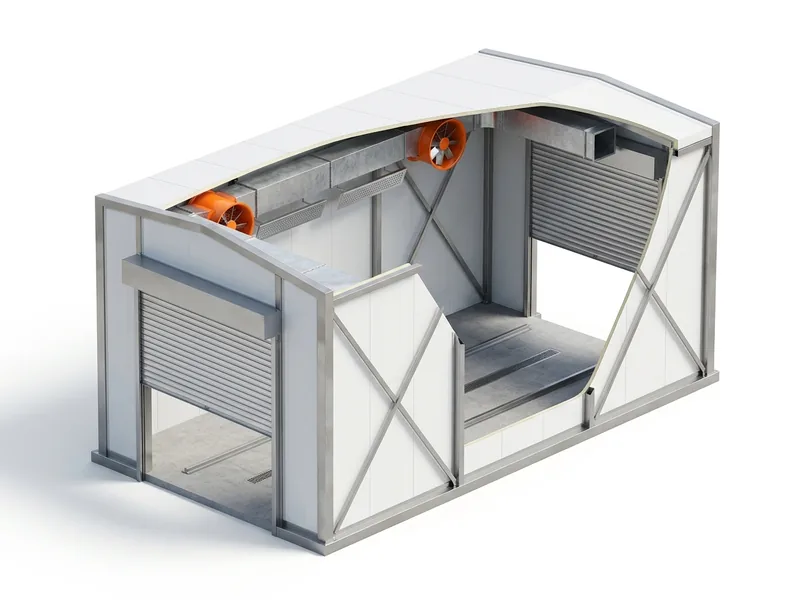
Wet Trailers Still Carry Live Virus
BioFortis P05 pig truck drying room delivers 700–800 kW of heat with floor-level differential ducts and dual-side fan towers. Full-length hog trailers under 14 m reach and hold 70°C+ across cold wheel wells and lower deck slats for 30 minutes, validated by 4 consecutive installations at 85–95% tropical humidity in Malaysia. Designed specifically for commercial swine biosecurity under TADD (Thermo-Assisted Drying and Decontamination) protocols, this pig truck drying room achieves proven PRRS virus inactivation temperature and PEDV kill criteria inside winter and monsoon wash centers.
Three Bay Sizes for Daily Dispatch Volume
Configure one off-site drying bay or parallel chambers matched directly downstream of your wash lanes.
Standard 14 m Off-Site Drying Bay
Dedicated 700–800 kW thermal drying chamber handling 8–12 livestock or feed trucks per shift.
- Fits multi-tier hog & feed trucks under 14 m length
- Differential multi-level hot-air ducts eliminate cold spots
- One-touch PLC touchscreen with automated temperature logs
Dual-Bay High-Turnaround Center
Twin parallel 700–800 kW chambers drying 16–28 trailers daily with zero dispatch bottleneck.
- 2 × P05 Chambers with synchronized PLC audit logging
- Active vapor exhaust maintains 30–45 min tropical cycles
- Directly downstream of P01/P02/P03 automated wash bays
Full Integrator Biosecurity Hub
End-to-end physical decontamination plus post-drying on-site ASFV PCR swab clearance.
- Turnkey Wash Bay + P05 Drying Room + UPN0102/0104 PCR
- Add P06 10 kW PTC modules for supply & small-van rooms
- Complete civil CAD, modular shipping & commissioning
How Heat Reaches Wheel Wells and Lower Decks
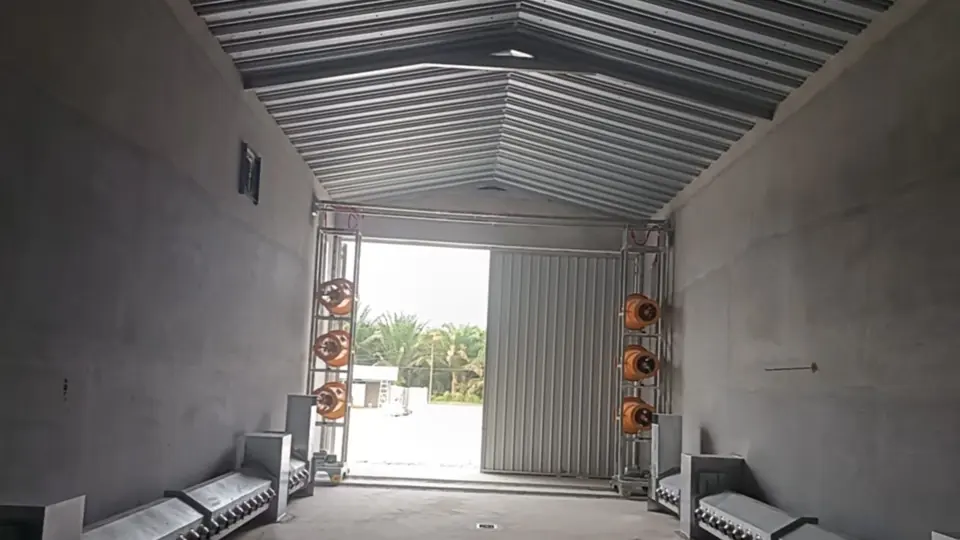
Floor Ducts Heat Wheel Wells First
Simple ceiling heaters let warm air float above the trailer roof while steel axles and bottom slats stay cool and damp. P05 pairs dual-side fan towers with floor-level jets to equalize temperature from bottom tires to top deck.
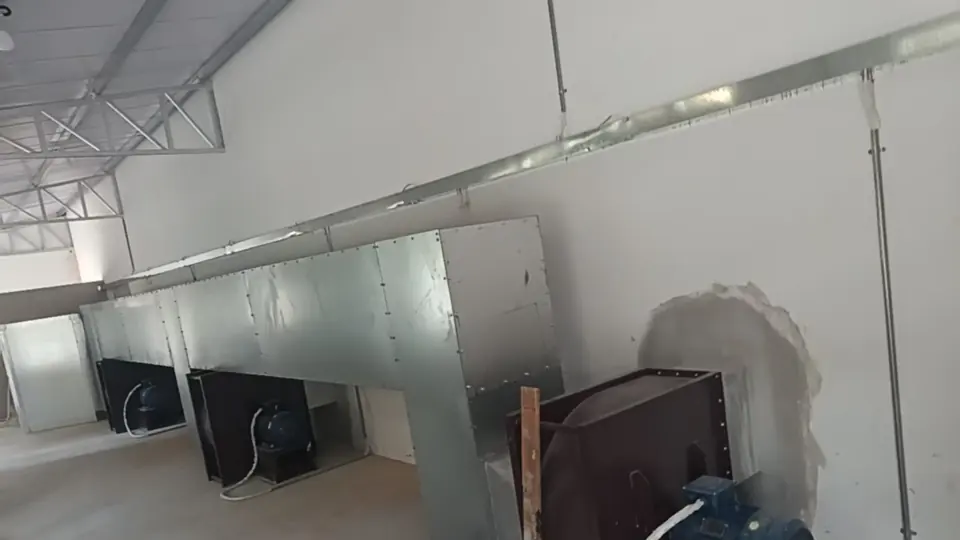
Active Vapor Exhaust Beats 90% Humidity
Closed boxes trap wet steam inside during tropical monsoons and stall drying completely. Automated exhaust dampers vent moist air while insulated supply plenums keep heat inside, locking cycle times between 30 and 45 minutes.
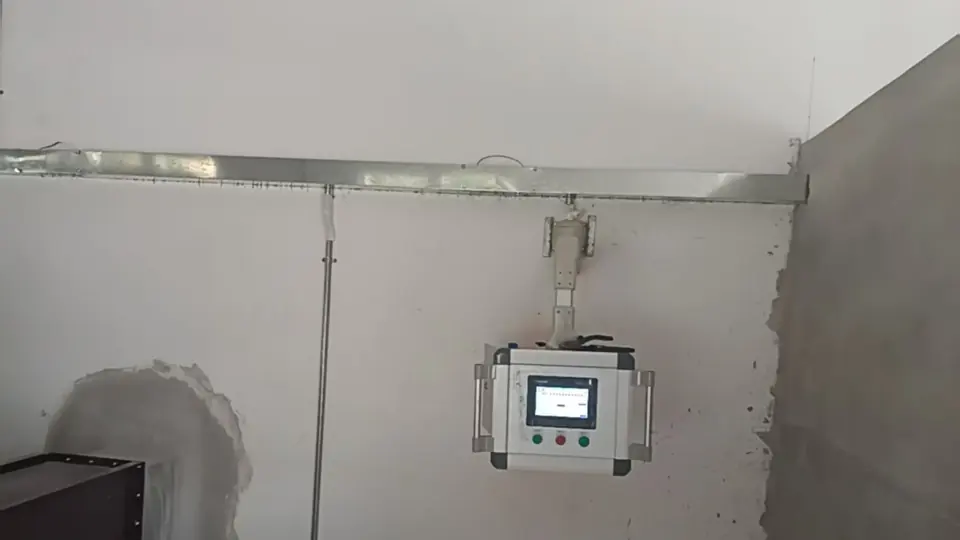
Locked PLC Programs Prevent Rushed Cycles
When ten trucks wait in line, drivers push operators to open doors early. One press on the P05 PLC runs pre-heat, the 70°C+ hold timer, and cooldown automatically while saving multi-point temperature audit logs.
Four Truck Drying Mistakes Built Out
90% Tropical Humidity Preventing Air-Drying
Active moisture exhaust dampers paired with 700–800 kW high-velocity airflow complete drying in 30–45 minutes.
Overhead-Only Heaters Leaving Chassis Cold Spots
Differential floor-level ducts and dual-side fan towers heat wheel wells and lower decks evenly.
Drivers Terminating Cycles Early Without Records
One-touch PLC automation enforces preset holding timers and logs verifiable cycle completion data.
High Fuel Burn from Poor Insulation & Leakage
Insulated supply plenums and controlled exhaust staging cut fuel consumption per trailer cycle.
Inside the P05 Drying Chamber
High-output indirect thermal source delivers fast chamber ramp-up with insulated low-loss supply plenums.
Heavy-duty circulation fans force continuous zero-dead-zone airflow through multi-deck trailer slats.
Directed bottom thermal jets warm wheel wells, axles, and cab steps to eliminate cold spots.
Locks in target 70°C+ holding durations and logs verifiable completion certificates for every truck.
P05 Technical Specifications
Factory-verified thermal, electrical, and vehicle-capacity specifications for EPC tendering.
| Parameter | Specification | Note |
|---|---|---|
| Rated Voltage | AC 380V / 50Hz | 3-Phase; 60Hz export fan & control build available |
| Max Electrical Load | 40 kW | Powers dual-side circulation fan towers & PLC cabinet |
| Max Heating Power | 700–800 kW | High-output thermal exchange for rapid 70°C+ bake |
| Suitable Vehicles | Livestock, Feed & Transfer <14 m | Fits full-length multi-tier hog haulers & feed tankers |
| Airflow Architecture | No-Dead-Zone Differential Zoning | Targets wet chassis, wheel wells & lower deck corners |
| Control Mode | One-Touch Automated PLC + Logging | Proven across 4 repeat commercial units in Malaysia |
| Swine TADD Target Kill | 70°C+ × 30 min Hold (PRRSV, PEDV, ASFV) | Dedicated pig & feed transport decontamination; removes damp viral pockets |
Size Drying Bays, Time & Fuel Load
Civil, Electrical & Piping Interface Checklist
- Insulated Bay Structure: Build a fire-rated insulated chamber sized for trailers under 14 m with tight-sealing high-temp entry and exit doors.
- Power & Thermal Supply: Provide AC 380V 3-phase power (max 40 kW electrical load) plus matched fuel supply for 700–800 kW heating output.
- One-Way Dirty-to-Clean Flow: Align the P05 chamber directly downstream of the wash bay so sanitized dry trailers exit into the clean zone.
Full AutoCAD (.DWG) and PDF foundation layouts are delivered within 5 business days of order confirmation.
Preventive Maintenance & Wear-Part Intervals
- Weekly Check: Inspect door gaskets, exhaust damper movement, and intake screens to maintain rapid moisture removal.
- Monthly Calibration: Cross-check chamber RTD temperature probes to guarantee accurate 70°C+ PLC logging.
- Semi-Annual Service: Lubricate high-temp circulation fan bearings, check drive belts, and inspect thermal duct fasteners.
Need consolidated 12-month wear-part kits? See our Genuine Spare Parts Program
From Site Audit to Live Commissioning
Climate & Fleet Sizing
Assess ambient humidity, winter lows, daily truck count, and trailer length (<14 m).
Chamber & Ducting CAD
Deliver insulated bay dimensions, fan tower anchors, and 40 kW electrical schematics.
Thermal & PLC Factory FAT
Verify fan balance, thermal controls, safety interlocks, and HMI logging before crating.
Modular Container Packing
Ship pre-assembled fan towers, heat exchanger, ducts, and PLC cabinet in sea containers.
On-Site / Remote Commissioning
Verify multi-point chamber thermal mapping and train farm staff on PLC cycle logs.
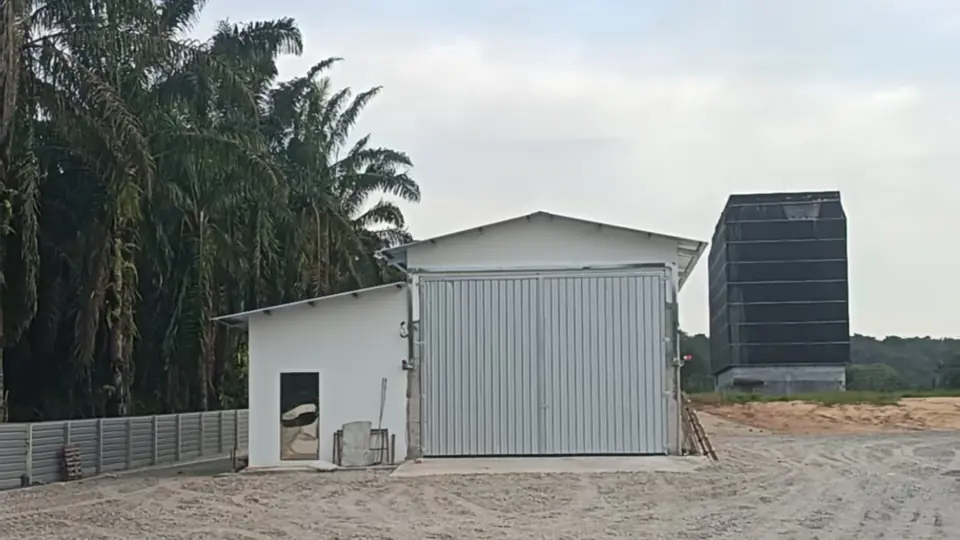
Four Repeat Chambers Running in Perak, Malaysia
At 85–95% tropical humidity, washed livestock trucks stayed wet overnight inside natural air sheds. A Commercial Swine Production Group in Perak, Malaysia installed one P05 700–800 kW drying room, verified thermal hold logs under monsoon load, and ordered three more identical units.
Testing Reports and Installation Drawings
Thermal & PLC FAT Report
Factory test sheets verifying fan velocity, heater control, and PLC temperature logging.
Insulated Bay & Duct CAD
Complete DWG/PDF chamber structural drawings, floor duct layouts, and 40 kW wiring specs.
English HMI & TADD SOP
Operator manual for one-touch cycle starts, log export, and emergency thermal shutoffs.
Customs & 12-Month Spare BOM
Export invoices, HS codes, and spare RTD sensors, belts, gaskets, and contactors.
Common Questions on Pig Truck Drying
01What temperature and holding time are needed in a pig truck drying room to inactivate ASFV?
02How does the P05 perform in 85–95% tropical humidity climates like Malaysia or Vietnam?
03How does differential thermal airflow eliminate cold spots in wheel wells and multi-tier decks?
04What maximum truck length and electrical load does the P05 support?
05How long does a full drying and thermal baking cycle take per livestock trailer?
06How does one-touch PLC logging prevent drivers from cutting drying cycles short?
07When should a farm choose the P06 10 kW PTC modular dryer instead of the P05 chamber?
08Can BioFortis supply both the insulated building shell and the thermal equipment?
09How does the P05 drying room integrate with upstream wash bays and downstream PCR checks?
10What routine maintenance keeps the 700–800 kW drying room operating at peak fuel efficiency?
11Does P05 meet swine TADD requirements for PRRS virus inactivation temperature?
Request a Drying Bay CAD Layout & Quote
Tell us your daily trailer count and local fuel options for a P05 chamber proposal within 12 hours.
Related Equipment
Request a Quote & CAD Layout
Dual-channel submission (Web3Forms + direct server backup). Share your herd scale, truck volume, or utility specs for a tailored CAD layout and FOB/CIF quotation.