Avian Influenza Poultry Farm Biosecurity: Perimeter Fog, Cage Wash & Misting SOP
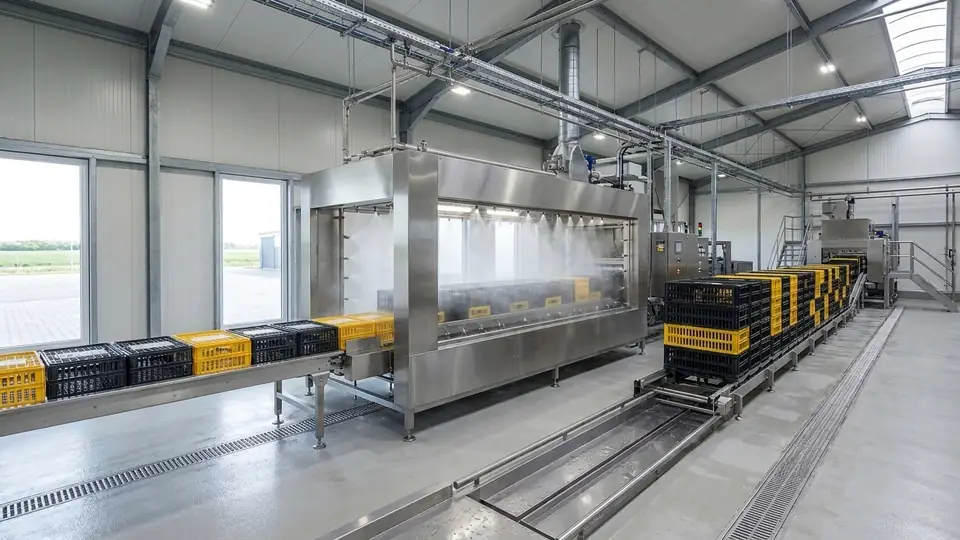
Once highly pathogenic avian influenza in poultry reaches open farm gates or shared chick-transport crates, flock mortality and regulatory quarantine wipe out months of production within 48 hours. Recognizing early bird flu symptoms poultry flocks show is essential for rapid veterinary reporting, yet physical prevention remains your only reliable commercial shield.
Strong biosecurity measures for poultry farms lock down four high-risk transmission points between flock cycles: perimeter access roads, worker doorways, multi-tier H-frame cages, and empty-house overhead trusses.
1. Clinical Triggers vs. Physical Poultry Disease Prevention
Farm supervisors monitor daily water drop, sudden mortality spikes, cyanotic combs, facial edema, and neurological tremors, classic avian influenza symptoms in chickens and commercial layers. By the moment overt bird flu symptoms poultry flocks display reach visual threshold, however, shed viral droplets have already coated litter dust, exhaust fan louvers, and egg-flat loading aprons.
Effective poultry disease prevention therefore works ahead of clinical breaks. Wild waterfowl flyways, returning feed trucks, live-haul catching crews, and contaminated multi-tier cage slats move virus onto farms long before clinical sickness appears. Treating every perimeter approach, door transition, and empty-house turnaround with standardized mechanical disinfection removes human fatigue from poultry farm disease control.
- Enforce immediate veterinary notification and sample testing whenever clinical sudden mortality rises.
- Separate external live-haul and feed traffic outside inner clean poultry house aprons.
- Standardize empty-house downtime protocols with fixed mechanical pressure, nozzle angle, and mist saturation.
2. Four Hardware Layers Stopping Flocks From Carrying Over Virus
Consumer knapsack sprayers cannot reach 4-meter ceiling beams, clear baked feces from top cage tiers, or throw disinfectant mist across wide muddy truck staging yards. Commercial layer and broiler complexes unify four dedicated hardware layers sized to multi-barn downtime schedules.
Combining P26 30–80 m perimeter fog cannons outside houses, 65°C P23 heated two-hand stations at personnel entries, cordless 48V P27 cage washing vehicles down narrow aisles, and redundant 22 kW P08 low-pressure misting networks saturates every airborne dust vector and surface crevice evenly.
- Replace brass spray tips that pit rapidly with 304/316L stainless steel manifolds built for oxidizing sanitizers.
- Pair duty-standby 1+1 pumps on central house misting stations so flock turnarounds never stall on one seal failure.
- Consolidate perimeter fog cannons, cage washers, and spare nozzles inside one container shipment.
| Farm Zone | Pathogen Entry Vector | BioFortis Equipment Solution | Key Operating Spec |
|---|---|---|---|
| Outer Gate & Access Yards | Live-haul cages, feed trucks & dust drift | P26 Fog Cannon + P03 Chassis Wash | 30–80 m throw · 6–32 SS nozzles · 20–60 L/min |
| House Clean Entry Airlock | Shift worker hands & contaminated tools | P23 Automatic Heated Two-Hand Station | AC 380V · 2 kW · 9 L/min @ 65°C · Timer Lock |
| Multi-Tier Layer/Broiler Aisles | Dried manure on upper cage wiring & trays | P27 48V Automated Cage Washer | 48V 45AH battery · 600 W cordless aisle travel |
| House Ceilings, Fans & Inlets | Aerosol dust & Salmonella carryover | P08 Full-Site Low-Pressure Disinfection | 22 kW 1+1 VFD · ≤5 bar (20 T/h) / ≤18 bar (12 T/h) |
3. Guarding Access Roads & Exhaust Banks With 30–80 m Perimeter Fogging
Every catching crew shift brings external crate trucks, forklifts, and loader drivers right alongside house air inlets. Dedicated perimeter biosecurity starts before wheels reach house concrete: P03 automatic IP67 underbody jets strip mud from arriving trucks while long-range P26 disinfectant fogger cannons project atomized mist 30 to 80 meters across loading aprons and windbreak lanes.
Mounted on stationary gate towers or mobile utility trailers, P26 units switch smoothly between outer-road virucidal misting and ammonia dust-suppression downwind of tunnel-ventilated exhaust fans.
- 6 to 32 stainless spray nozzles deliver 20–60 L/min atomization with wireless remote pan-and-tilt sweeping.
- Keeps operators safely inside trucks or gate offices away from concentrated aerosol disinfectant mist.
- Dual AC 380V / 220V options adapt cleanly to both fixed house power and mobile field generators.
4. Cordless 48V Cage Washing & Full-House Duty-Standby Misting
Washing four-to-eight-tier H-frame poultry cages manually with high-pressure lances exhausts workers in wet aisles and consistently leaves upper droppings belts under-cleaned. Dragging 380V electrical cords down narrow flooded walkways creates constant shock risks. BioFortis P27 eliminates both failures with a 48V 45AH rechargeable battery drive (600 W) executing preset multi-tier wash cycles and automated aisle shifting.
After dry cleaning and mechanical cage washout, our 22 kW P08 full-site low-pressure system automatically mists fixed overhead pipes at ≤5 bar (up to 20 T/h) or handheld wands at ≤18 bar (up to 12 T/h). Time-slotted zone control saturates air inlets, ceiling trusses, drinkers, and exhaust housings uniformly while 1+1 redundant VFD pumps guard against downtime.
- Zero electrical extension cords along wet cage aisles protects crew safety during tight flock cleanouts.
- 304 stainless P23 65°C heated two-hand stations enforce timed staff hand washing at every clean house door.
- Shared chemical proportioning technology prevents corrosive oxidizers from pitting pump seals.
5. Pre-Flock Verification & Spare-Part Readiness
Even the best poultry vaccination programs fail if residual Avian Influenza, Infectious Bursal Disease, or Salmonella hides inside caked fan louvers and dirty drinkers between placements. Always budget physical turnaround equipment maintenance right alongside flock placement schedules: flush stainless fog rings weekly, alternate P08 duty/standby pumps monthly, and recharge P27 48V battery banks in dry utility rooms.
Multi-species producers running both swine and poultry sites standardize spare pump seals, 100-mesh line strainers, and stainless nozzles on one BioFortis OEM inventory schedule so replacement parts never stall in import customs during a regional outbreak.
- Filter chemical tank supply water through 100-mesh screens so fine fog nozzles never clog mid-shift.
- Combine perimeter fog cannons with strict boot-change benches and 65°C heated personnel hand doors.
- Stock 12-month stainless nozzle, O-ring, and pump seal kits directly with initial equipment containers.
Upgrade Your Broiler or Layer Biosecurity Hardware
Send your poultry house dimensions, cage tier count, and aisle width to receive a 4-layer equipment BOM and FOB/CIF quote within 12 hours.
Explore S06 Poultry Biosecurity